
How to write my professor
When emailing your professor, it is crucial to have a clear goal, be concise, address them appropriately, and show appreciation for their time.

When emailing your professor, it is crucial to have a clear goal, be concise, address them appropriately, and show appreciation for their time.
Attending a scientific meeting can be very inspiring. It may broaden your network and help you to make yourself and your research visible to a broad audience. Nevertheless, it is also often time-consuming and expensive. How do you choose the right meetings to attend?

Effective communication is one of the most valuable skills in both personal and professional life. In this article, I explore the best books on communication. These books cover the most important communication skills, including mastering body language, improving your listening skills, negotiating difficult conversations, understanding cross-cultural nuances, team building, and enhancing leadership communication.
Being a professor is amazing: a lot of academic freedom to investigate and teach exciting subjects and a secure salary until retirement. However, obtaining this position can be pretty strenuous, and many young scientists do not know the requirements to qualify for such a position. In this article, I give you 10 essential parameters a selection committee will evaluate when selecting a new professor.
Social media platforms like LinkedIn, Facebook, Twitter, and TicToc are everywhere. Many scientists wonder whether they are missing out on something and ask themselves: “Should I create public LinkedIn, Facebook, Twitter, and TicToc profiles as a scientist?” The surprising answer is “No”!
Many young scientists fear that they are not investing enough in their scientific career, however, it is often not clear what exactly they should do and how important different aspects are such as publications, grants, teaching, mobility, technical skills and just being a good scientist. Find some directions here.
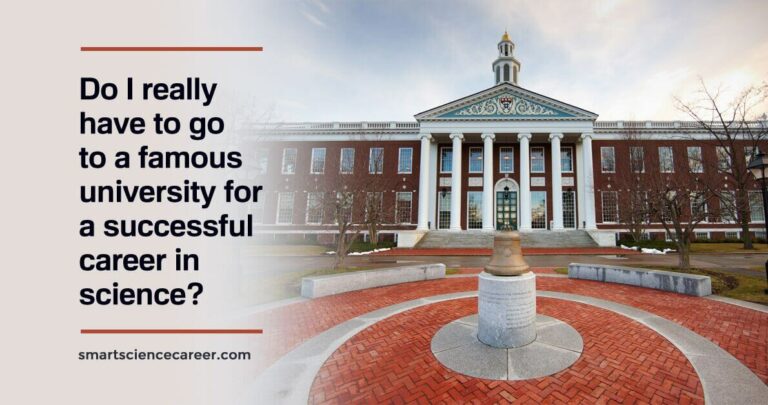
Everybody will tell you that going to a famous university is essential for a successful career in science. Important arguments are the network you build (for example, via alum associations), the excellent infrastructure, and the great scientists you might connect with. However, is it real – or is it a myth?